What Is a Patient-Specific Plate for Jaw Surgery?
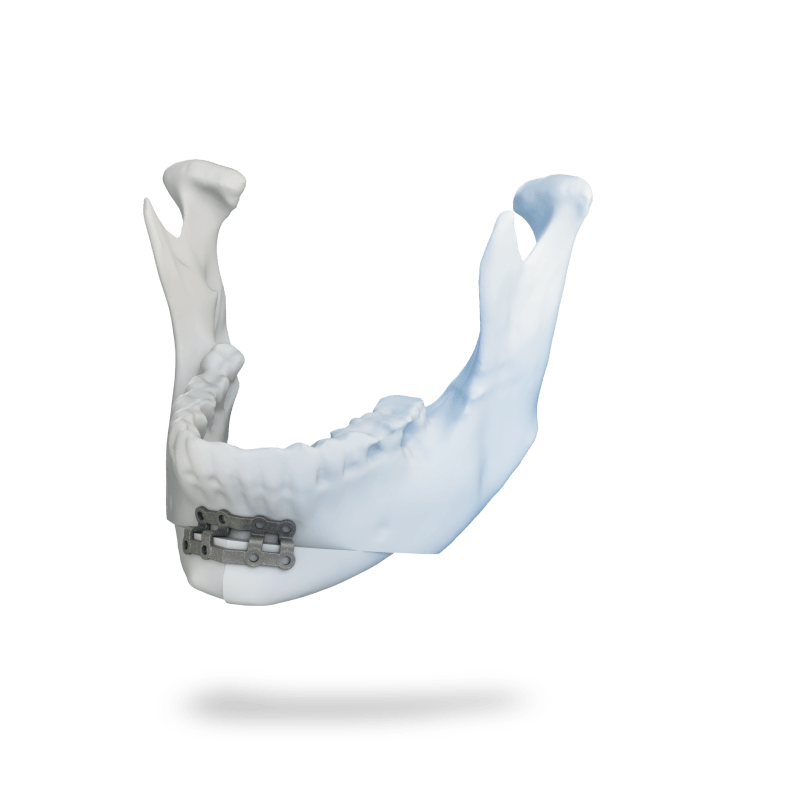
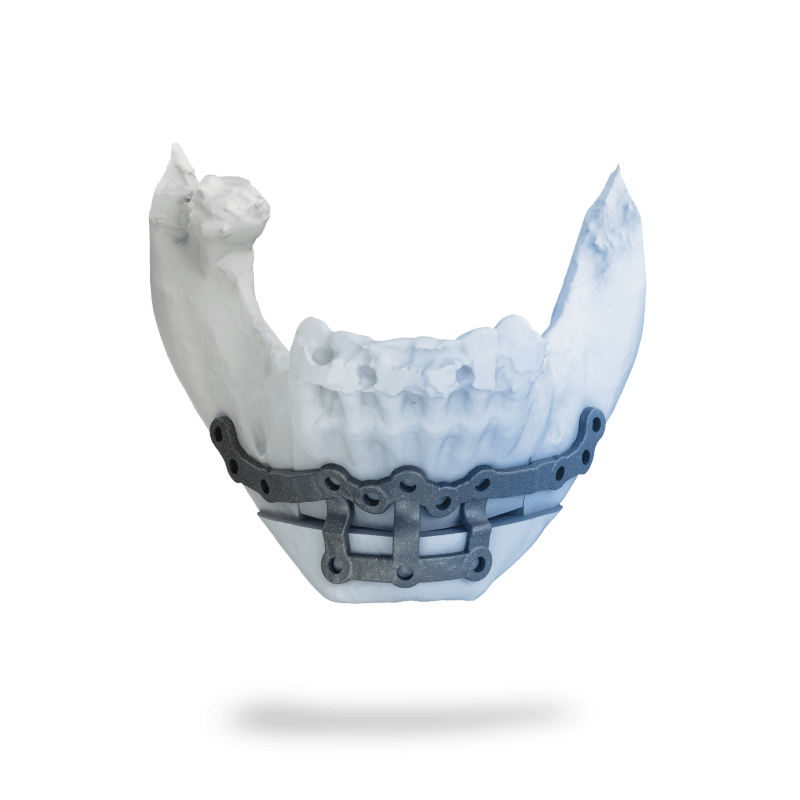
A Patient-Specific Plate (PSP) is a titanium fixation plate that is individually designed and manufactured for each patient. The plate is created to match the exact contour of the patient’s jawbone after osteotomy, eliminating the need for intraoperative plate bending. This can significantly reduce operative time.
In orthognathic surgery, including Le Fort I osteotomy, BSSO, genioplasty, and zygomatic osteotomy, the surgeon must stabilize the repositioned bone segments after osteotomy and skeletal movement. A patient-specific plate is designed to reproduce the planned postoperative skeletal position with greater precision than conventional stock plates.
Why Choose a Patient-Specific Plate Over a Standard Plate?
Standard plates are manufactured in predefined sizes and shapes. During surgery, the surgeon may need to bend and contour the plate to adapt it to the patient’s bone anatomy. Repeated bending can alter the mechanical properties of the plate and may reduce its fatigue resistance.
Farin Roshaan patient-specific plates are designed in advance according to the planned final position of the bone segments. They therefore require little or no intraoperative bending. This can improve anatomical adaptation, optimize force distribution, and provide more predictable fixation stability.
Patient-Specific Plate Design and Manufacturing Process at Farin Roshaan Teb
Step 1: Collection of Patient Data
The patient’s CBCT DICOM data, intraoral scan files, and the surgeon’s treatment plan are collected.
Step 2: Digital Osteotomy Simulation
All planned osteotomies are simulated using specialized surgical planning software, including Le Fort osteotomies, BSSO, genioplasty, or zygomatic osteotomy. The bone segments are then repositioned according to the approved treatment plan.
Step 3: Cutting Guide Design
A patient-specific cutting guide is designed to define the planned osteotomy lines and, when required, the screw-hole positions. This helps transfer the digital surgical plan accurately to the operating room.
Step 4: Patient-Specific Plate Design
After completion of the surgical simulation, the fixation plate is designed according to the bone geometry in its planned final position. Screw locations, plate thickness, contour, and overall geometry are determined in collaboration with the surgeon.
Step 5: Three-Dimensional Titanium Manufacturing
The plate is manufactured from titanium using high-precision additive manufacturing technology.
Step 6: Quality Control and Delivery
Before delivery, the plate undergoes quality-control procedures to verify dimensional accuracy, mechanical integrity, and compliance with the required sterilization protocol.
Applications of Farin Roshaan Teb Patient-Specific Plates
Le Fort I, Le Fort II, and Le Fort III Osteotomies
In maxillary osteotomies, patient-specific plates can be used to stabilize the maxillary segments in their planned postoperative position.
BSSO (Bilateral Sagittal Split Osteotomy)
Used to stabilize the mandibular segments following repositioning, while minimizing the need for intraoperative plate contouring.
Genioplasty
A patient-specific chin plate helps maintain and stabilize the planned position of the chin segment.
Zygomatic Osteotomy
Used for fixation of the zygomatic bone following osteotomy and repositioning.
Segmental Jaw Osteotomy
In complex cases involving simultaneous repositioning of multiple bone segments, patient-specific plates can help maintain the planned spatial relationship between the segments with a high degree of precision.
Patient-Specific Plates vs. Standard Plates
| Feature | Standard Plate | Farin Roshaan Patient-Specific Plate |
|---|
| Adaptation to bone anatomy | Requires intraoperative contouring | Preoperatively designed for the planned anatomy |
| Mechanical properties | May be affected by repeated bending | No intraoperative bending required in most cases |
| Surgical time | Generally longer | Potentially shorter |
| Fixation accuracy | More dependent on intraoperative adaptation | Digitally planned and patient-specific |
| Force distribution | Less predictable | Optimized through patient-specific design |
| Suitability for complex cases | Limited | Yes |