What Is a Patient-Specific Jaw Implant (PSI)?
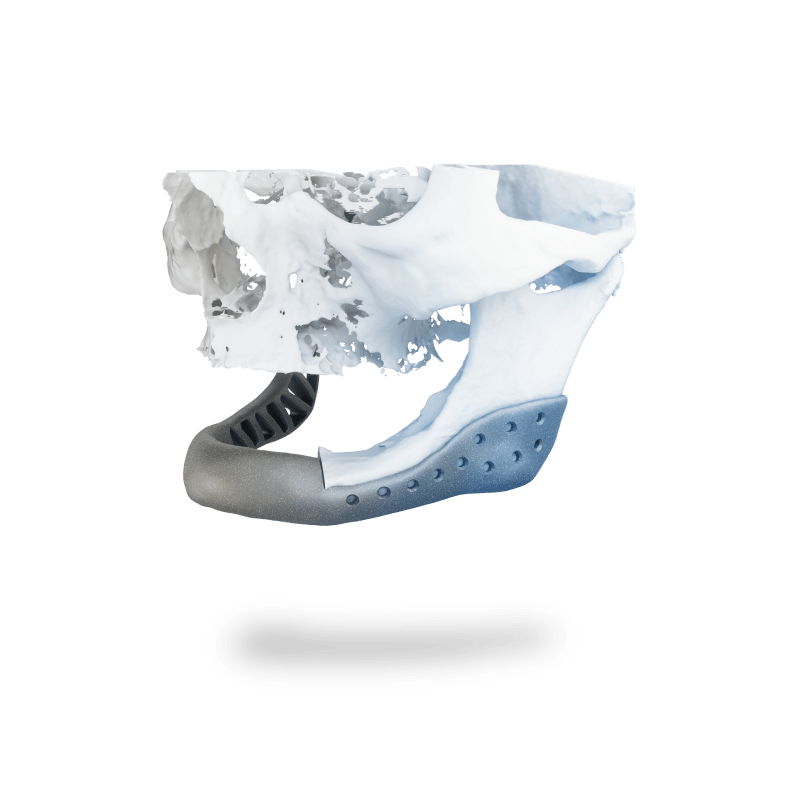
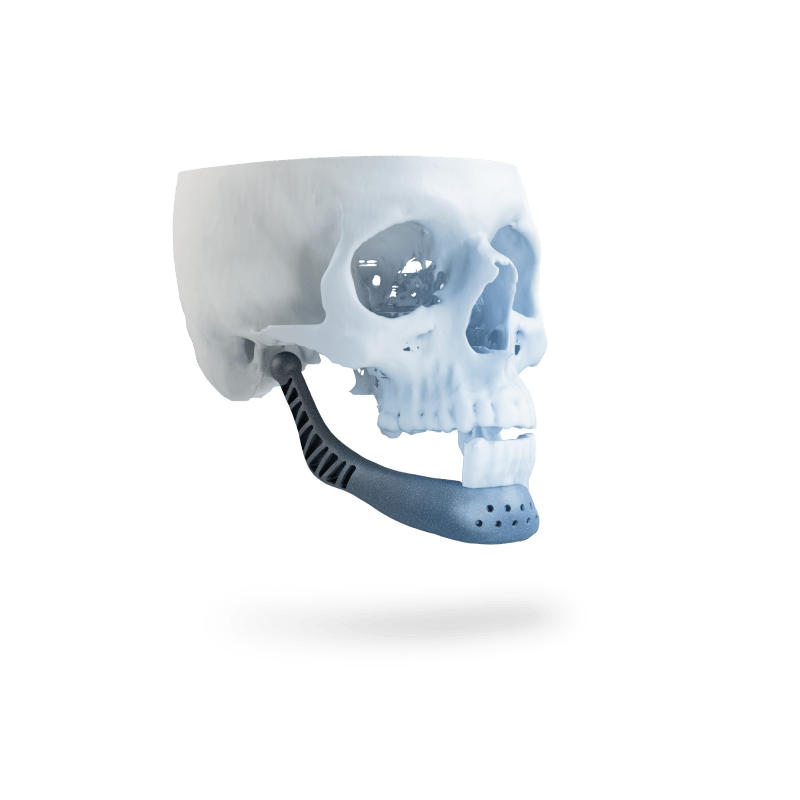
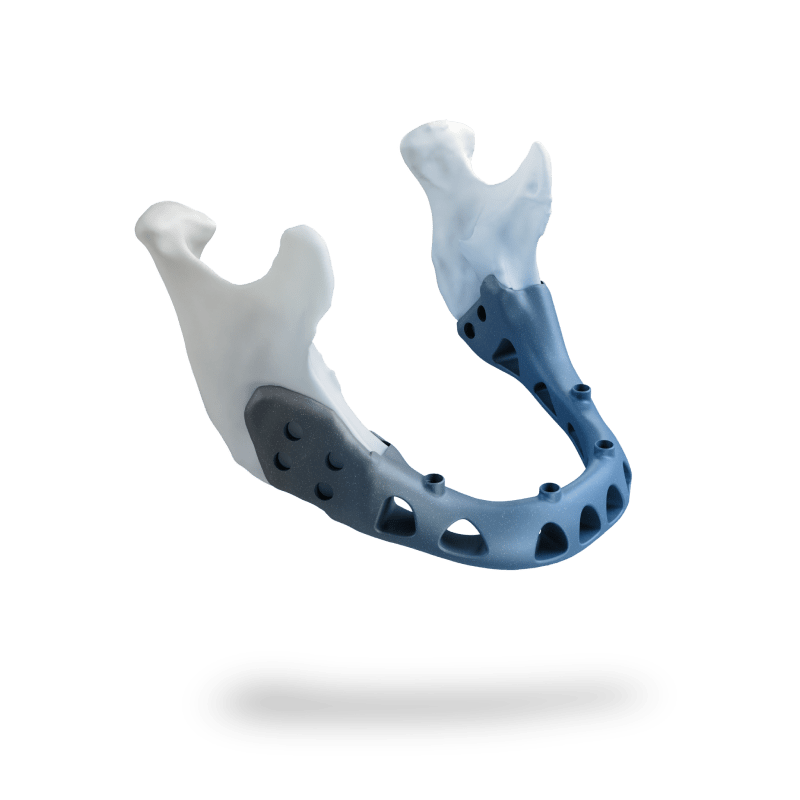
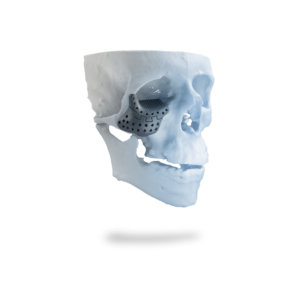
A Patient-Specific Implant (PSI) is a titanium or PEEK prosthetic implant that is individually designed and manufactured for each patient. Unlike off-the-shelf implants, which are produced in standard sizes and shapes, a PSI is precisely tailored to the unique maxillofacial anatomy of the individual patient.
This type of implant is indicated for patients who have lost part of the jaw, zygomatic bone, or orbital structures due to trauma, tumors, or congenital deformities and require reconstruction. In such cases, standard implants cannot accurately reproduce the geometry of the missing bone. A patient-specific implant is designed to restore the defect according to the patient’s individual anatomy.
Patient-Specific Jaw Implant Manufacturing Process at Farin Roshaan Teb
Step 1: Three-Dimensional Imaging and Scanning
A high-resolution CBCT scan of the affected region is obtained. This three-dimensional imaging dataset serves as the basis for PSI design.
Step 2: Patient-Specific Digital Design
Using specialized medical design software, the missing or damaged bone is digitally reconstructed. At this stage, the Farin Roshaan team works closely with the surgeon to define the implant’s precise shape, dimensions, anatomical fit, and screw fixation points.
Step 3: Surgical Simulation
The designed implant is positioned on the patient’s three-dimensional anatomical model. This allows the surgeon to assess the implant before surgery, review the planned reconstruction, and approve the final design.
Step 4: Three-Dimensional Printing in Titanium or PEEK
The patient-specific implant is manufactured with high precision using advanced three-dimensional manufacturing technologies. Titanium is one of the most widely used materials for maxillofacial implants because of its high strength-to-weight ratio, mechanical stability, and excellent biocompatibility.
Step 5: Quality Control and Gamma Sterilization
Before delivery, the implant undergoes quality-control procedures to verify dimensional accuracy, structural integrity, and compliance with sterilization requirements.
Types of Patient-Specific Implants at Farin Roshaan Teb
Mandibular PSI
Used for reconstruction of part or all of the mandible following tumor resection or traumatic injury. Depending on the extent of the defect, the implant may reconstruct a limited segment or a large portion of the mandibular arch.
Zygomatic PSI
Designed for reconstruction of the zygomatic bone following trauma or tumor surgery. Accurate restoration of the zygomatic contour is particularly important because it directly affects facial symmetry.
Orbital and Orbital Floor PSI
Used to reconstruct the orbital floor and other orbital defects following fractures or tumor surgery. These implants require a high level of anatomical precision to help restore orbital volume and support proper globe position.
Combined Mandibular and TMJ PSI
In complex cases involving both the mandible and the temporomandibular joint (TMJ), a combined patient-specific reconstruction may be designed to incorporate both the mandibular component and the joint prosthesis.
Patient-Specific Implants vs. Standard Implants
| Feature | Standard Implant | Farin Roshaan PSI |
|---|
| Anatomical fit | Limited | Patient-specific |
| Intraoperative adjustment | Often required | Minimal or not required |
| Surgical time | Generally longer | Potentially shorter |
| Placement accuracy | Limited by standard geometry | Precisely planned |
| Aesthetic outcome | Less predictable | Preoperatively simulated |
| Suitable for complex cases | Limited | Yes |
Frequently Asked Questions About Patient-Specific Jaw Implants
What materials are used to manufacture patient-specific jaw implants (PSIs)?
Farin Roshaan Teb manufactures PSIs using medical-grade titanium and, when clinically indicated, PEEK. Titanium is widely used in maxillofacial reconstruction because of its excellent mechanical strength, relatively low weight, corrosion resistance, and biocompatibility.
Which patients may need a patient-specific jaw implant?
Patient-specific implants may be indicated for patients who have lost part of the mandible, maxilla, zygoma, or orbital structures because of trauma, tumors, infection, or congenital deformities. They may also be used in selected complex orthognathic and reconstructive procedures where standard implants cannot provide the required anatomical fit.
Can patient-specific implants be used by different maxillofacial surgeons?
Yes. Farin Roshaan Teb provides the complete digital design workflow, patient-specific surgical guides, and three-dimensional printed anatomical models when required, enabling collaboration with oral and maxillofacial surgeons.
How long does the PSI manufacturing process take?
The process typically takes approximately 7 to 14 working days after receipt of the required imaging data and final approval of the design by the surgeon.
Can the surgical result be evaluated before the operation?
Yes. One of the main advantages of a digital PSI workflow is that the surgeon can review the three-dimensional reconstruction, implant position, and planned surgical outcome before the procedure and approve the final design.
How much does a patient-specific jaw implant cost?
The cost of a PSI varies depending on the implant type, size, anatomical region, material, and complexity of the reconstruction. For consultation and pricing information, please contact the Farin Roshaan Teb team.