Cutting Guide

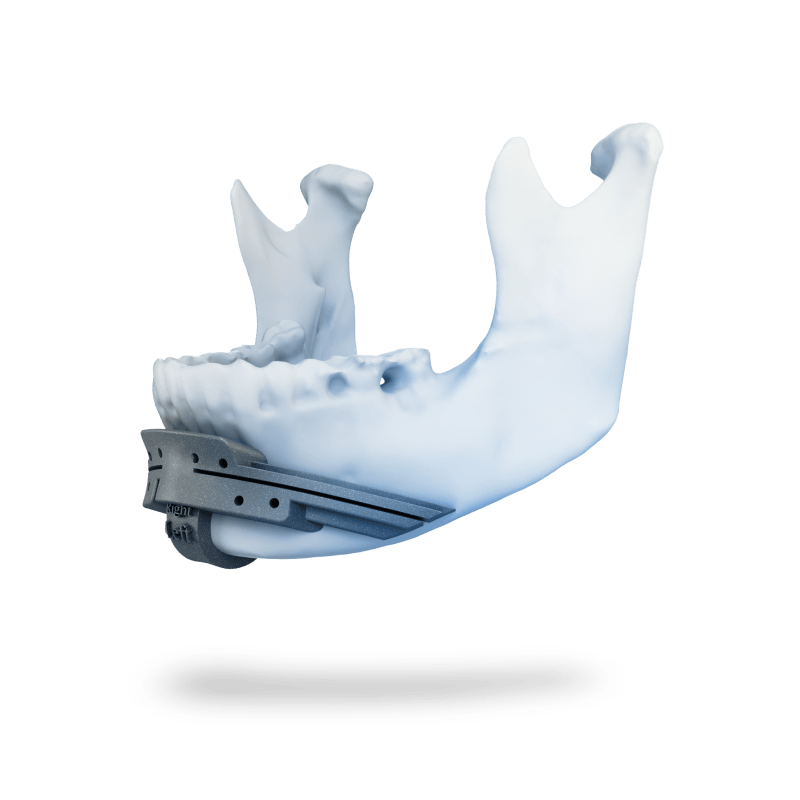
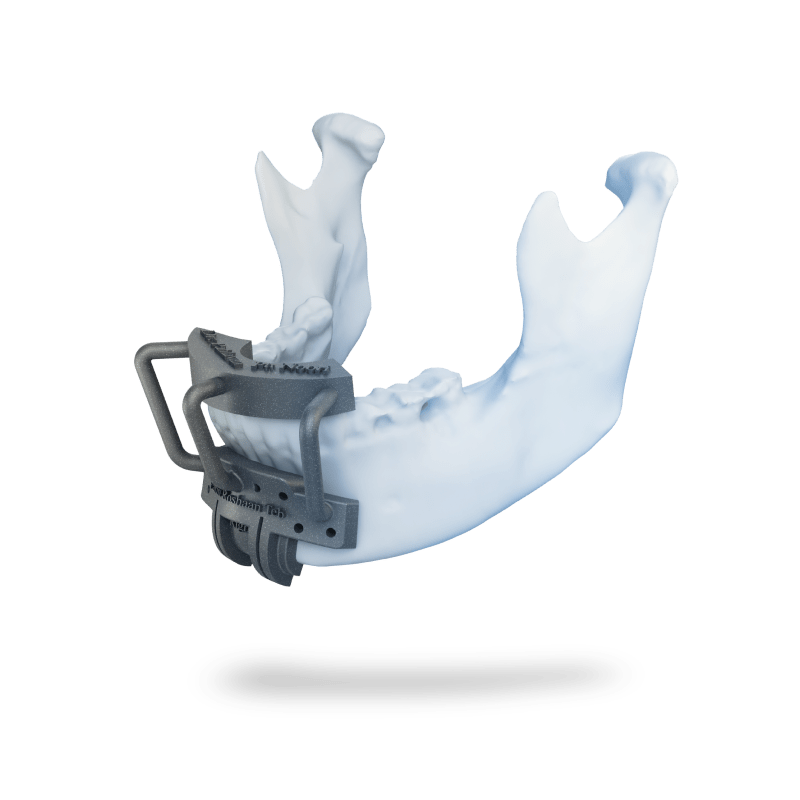
Cutting guides are essential for enhancing accuracy and reducing surgical duration in procedures such as genioplasty, Lefort osteotomy, lower jaw angle shaving, mandibular border shaving, and similar surgeries. These guides incorporate pathways for incisions and screw placements based on specific characteristics, enabling surgeons to confidently perform bone segment cuts. Additionally, in chin surgeries, the screw placements on the guides are designed so that the same holes can be used for both bone fixation and plate placement.

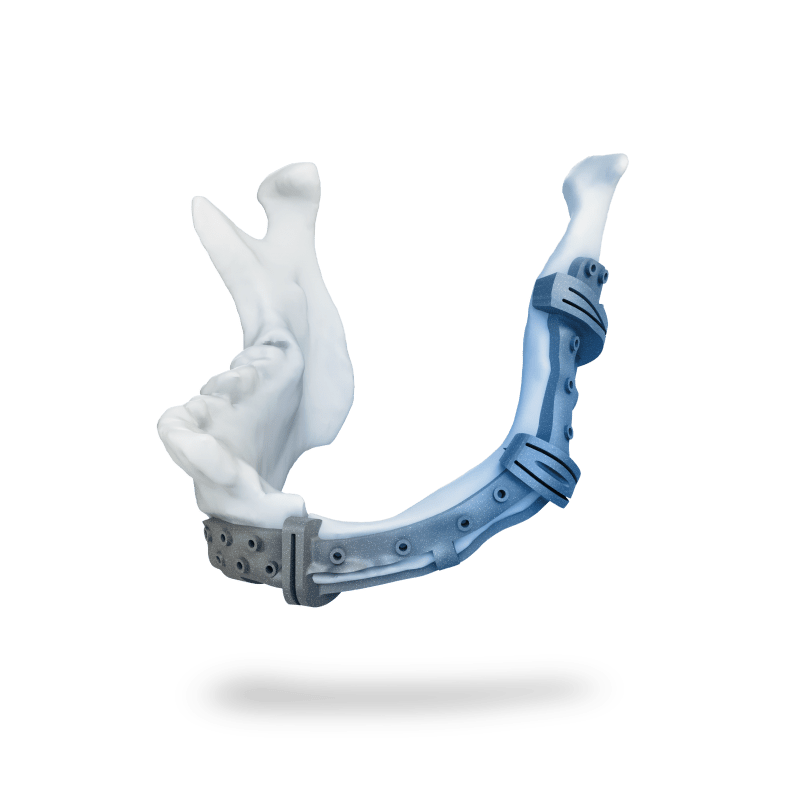
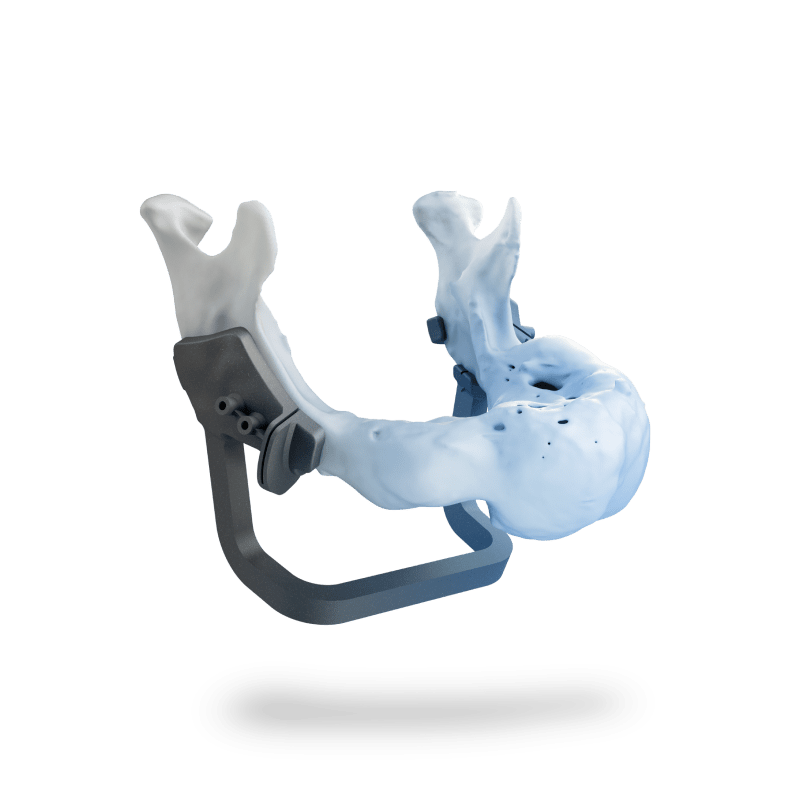
Cutting guides are also used for implanting prostheses that require bone sectioning. In these cases, the cutting path on the guide is designed to ensure that the prosthesis surface perfectly contacts the remaining bone surface during implantation. This guarantees a smooth fit between the bone and the prosthesis, leaving no gaps.

Advantages of using cutting guides

Pre-determination of all surgical parameters: This service allows for the pre-determination of all incision and screw placement locations

What Is a Maxillofacial Surgical Guide?

A maxillofacial surgical guide, also known as a cutting guide, is a patient-specific surgical instrument designed and manufactured before surgery. It precisely defines the planned bone-cutting path, screw placement points, and intended jaw repositioning during the procedure.

In maxillofacial procedures such as orthognathic surgery, the surgeon must perform osteotomies and reposition the jaws with a high degree of accuracy. Even a small deviation from the planned surgical pathway may affect the final outcome. A patient-specific surgical guide helps minimize such deviations by transferring the digital surgical plan directly to the operating room.


Why Are Maxillofacial Surgical Guides Important?

In conventional surgical workflows, the location and orientation of bone cuts may depend more heavily on intraoperative assessment and the surgeon’s experience. Although surgical expertise remains essential, digital surgical guides provide an additional level of precision and predictability.

With a digitally designed surgical guide:

  • The exact osteotomy pathway is simulated before surgery.

  • The surgeon can perform the planned cuts without relying solely on intraoperative estimation.

  • Surgical time may be reduced.

  • The risk of positioning and cutting errors can be minimized.

  • Surgical outcomes become more predictable.


How Are Cutting Guides Manufactured at Farin Roshaan Teb?

Farin Roshaan Teb designs and manufactures patient-specific cutting guides through a fully digital workflow. The process includes the following stages:

Step 1: Scanning and Imaging

An intraoral scan and CBCT imaging of the patient’s maxillofacial anatomy are obtained. These datasets provide the anatomical foundation for digital planning and guide design.

Step 2: Digital Surgical Planning

The imaging and scan data are imported into specialized digital surgical planning software. At this stage, the Farin Roshaan team works in collaboration with the surgeon to determine the precise location, angle, and depth of the planned osteotomies.

Step 3: Patient-Specific Guide Design

Based on the approved surgical plan, a patient-specific cutting guide is digitally designed. The guide is tailored to fit the individual anatomy of the patient’s jaw, allowing the planned osteotomy to be transferred accurately to the surgical field.

Step 4: Three-Dimensional Printing

The surgical guide is manufactured using high-precision 3D-printing technology and biocompatible materials suitable for the intended clinical application.

Step 5: Quality Control and Delivery

Before delivery to the surgeon, the guide undergoes quality-control procedures to verify dimensional accuracy, anatomical fit, and compliance with the required sterilization protocol.


Applications of Farin Roshaan Teb Cutting Guides in Maxillofacial Surgery

Orthognathic Surgery

Patient-specific cutting guides can be used in a range of orthognathic procedures, including:

  • Le Fort osteotomies for repositioning the maxilla

  • Bilateral Sagittal Split Osteotomy (BSSO) for mandibular repositioning

  • Genioplasty for correction and repositioning of the chin

More broadly, cutting guides may also be used in procedures involving Le Fort osteotomies, mandibular contouring or shaving, fixation planning, and complex bimaxillary movements.

In these procedures, the cutting guide defines the planned osteotomy pathway so that the surgeon can reproduce the preoperative digital plan with greater precision.


Implant and Prosthetic Reconstruction Surgery

In reconstructive procedures involving patient-specific prostheses or implants, surgical guides can help determine the exact location of bone resection and implant placement. This allows the prosthesis to achieve the intended contact with the remaining bone and helps reproduce the digitally planned reconstruction as accurately as possible.


Complex Maxillofacial Reconstruction

In patients with defects caused by trauma, tumor resection, or congenital deformities, patient-specific cutting guides can play an important role in complex reconstructive procedures.

They can help the surgical team accurately reproduce the planned bone resections and facilitate the placement of patient-specific implants, grafts, or other reconstructive components according to the preoperative digital plan.


Why Farin Roshaan Teb?

Farin Roshaan Teb has been active in the field of digital maxillofacial surgery since 2016. Through collaboration with oral and maxillofacial surgeons across Iran, the company has developed extensive experience in digital surgical planning and the design and manufacturing of patient-specific cutting guides.

By integrating medical imaging, three-dimensional surgical planning, patient-specific design, and advanced manufacturing technologies, Farin Roshaan Teb provides customized surgical solutions for orthognathic surgery, maxillofacial reconstruction, and other complex craniofacial procedures.

portfolio

Opinions of users of this service