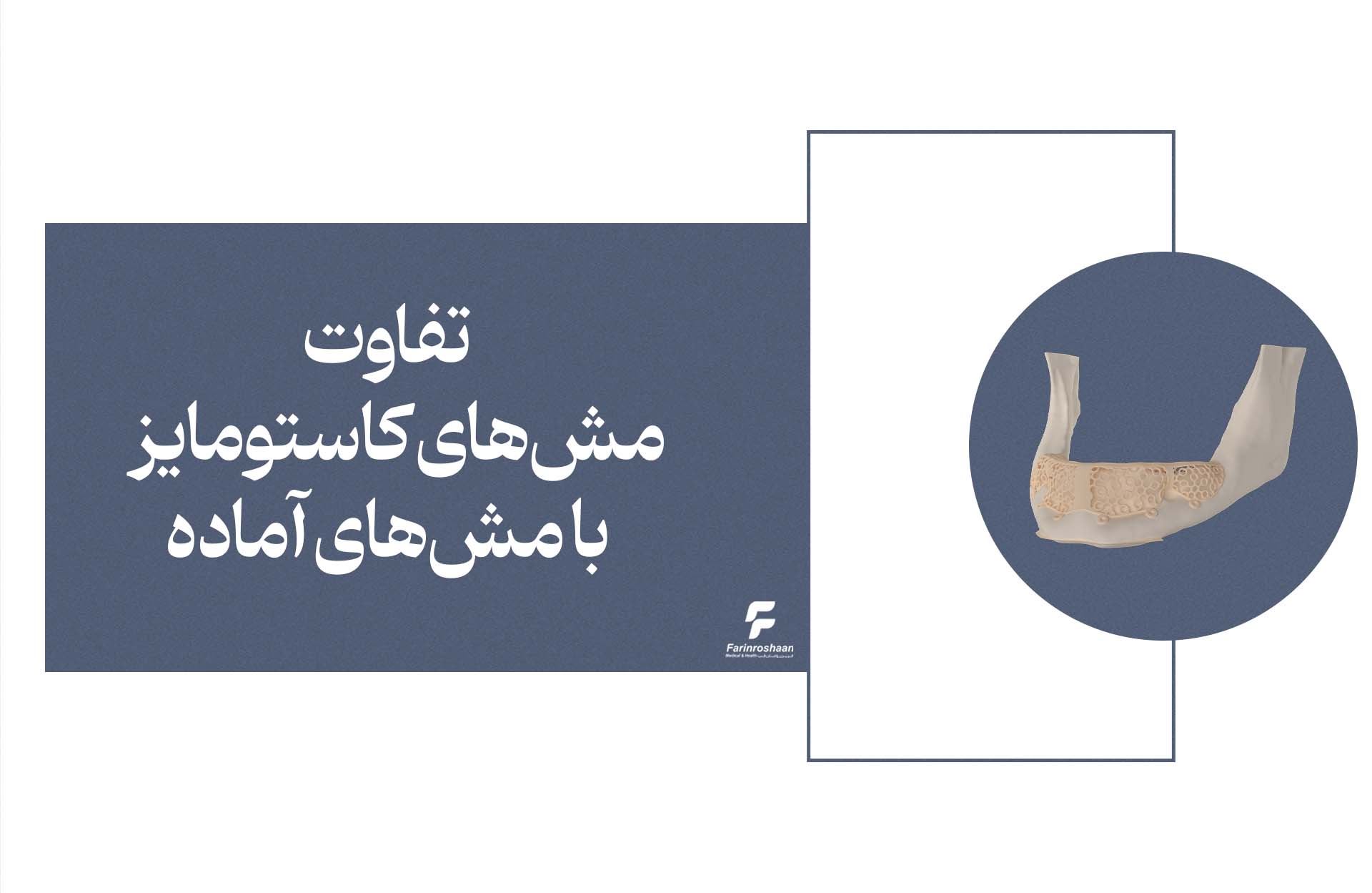
The End of Implant Therapy or the Beginning of More Important Decisions
Contrary to common belief, dental implant treatment does not always begin in a situation where “adequate bone” is available. In many patients, years after tooth extraction, the jawbone gradually resorbs—its height decreases, its width narrows, and the solid, reliable foundation required for implant placement is no longer present.
In such situations, the central question is no longer whether implant therapy is possible.
The real question becomes how bone can be reconstructed in a way that is both predictable and safe.
For years, alveolar bone reconstruction has been an integral part of advanced implant therapy. Various approaches have been introduced, including bone grafting, barrier membranes, guided bone regeneration techniques, and, in some cases, alternative strategies designed to bypass severe bone deficiency. However, as defects become more complex—particularly when both vertical and horizontal dimensions are compromised—the ability to control the shape and volume of the reconstructed bone becomes critically important.
This is where customized meshes enter the treatment narrative.
In its simplest form, a customized mesh is a pre-designed scaffold—created not based on average anatomy, but on the specific jawbone anatomy of the individual patient. Typically fabricated from titanium, it is thin, perforated, and precisely shaped to preserve the exact space in which new bone is intended to form. Its role is not to replace bone, but to maintain space and guide the regenerative process.
In implant-related alveolar reconstruction, the main challenge is often not a lack of space, but rather the inability of the soft tissue to allow bone formation within the desired volume. Soft tissue naturally tends to collapse into the surgical site, exert pressure, and reduce graft volume. Titanium mesh is specifically designed to counteract this tendency—a temporary framework that prevents the planned regenerative space from being lost.
What distinguishes customized meshes from stock meshes is not merely their digital design or three-dimensional manufacturing. The key difference lies in predictability. When a mesh is designed based on three-dimensional imaging of the patient’s jaw, the clinician knows in advance how much bone is expected to form, where it will form, and with what contour. This becomes especially critical in esthetic zones or in cases where the final prosthetic outcome requires high precision.
That said, realism is essential. The use of mesh—whether stock or customized—is not without risk. The most significant challenge remains soft tissue management. If soft tissue closure is inadequate or excessive tension develops, wound dehiscence and mesh exposure may occur. While exposure does not necessarily mean complete failure of reconstruction, it can complicate the treatment course and necessitate additional intervention.
For this reason, customized mesh is not a solution for every patient. Proper patient selection, soft tissue quality, control of risk factors such as smoking and oral hygiene, and—perhaps most importantly—accurate mesh design play decisive roles in treatment success. Clinical experience shows that the closer the design aligns with real-world surgical conditions—from edge geometry to screw positioning—the lower the complication risk and the higher the predictability of outcomes.
Compared with other bone augmentation strategies for implant therapy, customized mesh is typically considered when simpler approaches are insufficient. It is not a universal replacement for all methods, but rather one component of a thoughtful, staged decision-making process. Sometimes it is the best choice; sometimes it is not. Ultimately, it is the correctness of the decision—not the tool itself—that determines the outcome.
Today, advances in digital planning and closer collaboration between surgeons and engineering teams have enabled more intelligent use of customized meshes. When design is guided from the outset by implant- and prosthetically driven planning, bone reconstruction becomes more than an intermediate step—it becomes part of a coherent and goal-oriented treatment pathway.
Within this framework, the design and production of customized meshes for alveolar reconstruction in implant therapy achieve their greatest value when based on patient-specific anatomy, precise surgical planning, and a clear understanding of soft tissue limitations. At Farin Roshan Teb, customized meshes are not viewed as standalone products, but as components of integrated treatment solutions—aimed at increasing implant success rates and reducing uncertainty in bone reconstruction.
Ultimately, a customized mesh is a tool—neither a miracle nor a threat. When properly selected, properly designed, and used in the right clinical context, it can significantly shorten the distance between “insufficient bone” and a successful implant outcome.